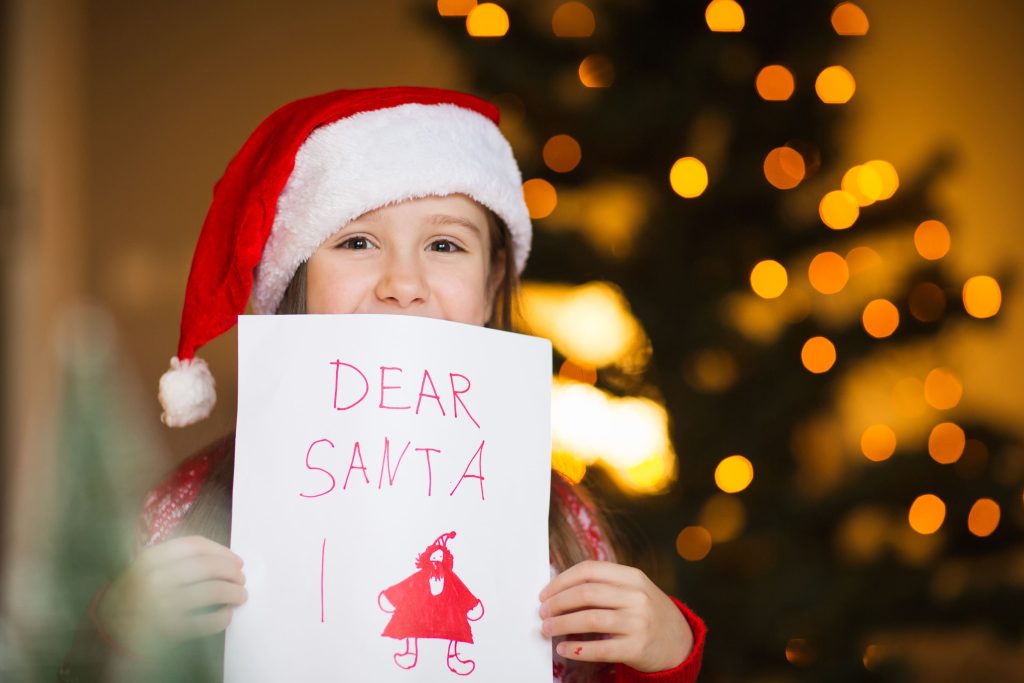






An encouraging letter from Santa should help a child feel noticed, not monitored. The strongest message names something true, explains what it shows about the child’s effort or character, and offers a small next step without threatening the Nice List or promising that a difficult situation will disappear. Santa’s voice supplies warmth; the family-supplied detail supplies credibility.
What Makes an Encouraging Letter from Santa Actually Encouraging?
Encouragement describes a process the child can recognize. “You are amazing” is pleasant but vague. “You kept practicing the song after the first rehearsal felt hard” tells the child exactly what Santa noticed and which behavior is worth carrying forward.
Use the N.O.R.T.H. framework:
- Notice: Name one real event or effort.
- Own the evidence: Explain what the child did, not what adults wish they had done.
- Reflect a quality: Connect the action to patience, courage, kindness, or responsibility.
- Tiny next step: Suggest one manageable continuation.
- Hold the outcome lightly: Do not guarantee success, gifts, or emotional change.
The framework keeps the letter grounded. It also prevents praise from becoming a disguised instruction list.
Replace Pressure With Specific Recognition
| Avoid | Use instead | Why it works better |
| “Santa is always watching.” | “I heard how you tried again after the first attempt.” | Recognizes an action without surveillance |
| “Be good or you may lose your presents.” | “Keep practicing the kindness you showed your brother.” | Encourages a repeatable behavior without a threat |
| “You are the smartest child in class.” | “You asked for help and kept working through the hard part.” | Praises persistence rather than comparison |
| “Next year will be perfect.” | “You do not have to solve everything at once.” | Offers steadiness without an impossible promise |
| “Make your parents proud.” | “Be proud of the work you put into this.” | Keeps the child’s effort at the center |
Santa can be warm and magical without becoming an authority adults invoke when ordinary boundaries are difficult. Keep household rules in direct family conversations.
How to Write an Encouraging Letter from Santa for a Difficult Year
Start by deciding what the child already knows. If they experienced a school change, friendship problem, illness in the family, or disappointing result, do not reveal a private fact they were not expecting Santa to mention. Use the level of detail the child can hear safely.
Then recognize the response rather than dramatizing the hardship. “You kept going to the new classroom even when mornings felt unfamiliar” is grounded. “Santa knows everything you suffered” is intrusive and too large for a Christmas message.
Keep the next step small: ask for continued practice, another kind act, a conversation with a trusted adult, or simply time to rest. For serious emotional, behavioral, safety, or health concerns, a Santa message is not a substitute for support from caregivers and qualified professionals.
A Complete Supportive Santa Letter Example
Dear Eli,
The North Pole team told me that starting at a new school was not easy at first. I also heard that you kept walking into class, learned two new names, and invited someone to sit with you at lunch. Those may look like small moments, but they take real courage.
You do not have to feel brave every minute. Courage can be asking for help, trying one more time, or taking a quiet break before you begin again. Mrs. Claus asked me to remind you that patient steps still count.
Keep noticing the people who make room for you, and keep making a little room for someone else.
I am proud of the effort you made this year.
Santa
The message acknowledges difficulty, names observable actions, permits mixed feelings, and offers a modest next step. It does not promise a perfect outcome or connect gifts to behavior.
Choose Details That Santa Can Use Naturally
Prepare four facts before drafting or ordering:
- What challenge or new task did the child face?
- What did the child actually do in response?
- Which quality did that action demonstrate?
- What gentle next step fits the child’s situation?
Santa’s Magical Kingdom’s personalized letter from Santa creator asks for a proud moment, examples of helpful behavior, a special action, interests, wishes, and an optional sibling or friend. Those fields give Santa concrete material when the parent enters evidence rather than labels.
For example, replace “very kind” with “made a card for Grandpa after his appointment.” Replace “worked hard in school” with “practiced multiplication for ten minutes after dinner.” The finished message becomes more believable because the detail is checkable.
The Nice List letter guide is useful when the goal is formal recognition. The Santa letter sample guide can help with the broader message structure.
Keep the Reveal Private When the Detail Is Personal
Not every message should be read aloud to a room. If the letter mentions nervousness, a difficult transition, learning support, family stress, or a repaired mistake, let the child choose whether to share it.
Use a simple envelope with the child’s name, avoid jokes on the outside, and place the letter somewhere they can open it calmly. A supportive message works when it feels like recognition, not a public performance.
For a letter that strikes exactly the right tone of warmth and encouragement, you can order an encouraging, personalized letter from Santa at Santa’s Magical Kingdom — tailored to your child’s specific accomplishments and kind deeds this year.
Final Thoughts: Build an Encouraging Letter from Santa From Evidence, Not Pressure
Choose one real effort, connect it to a quality, and offer one manageable next step. Keep the tone warm, the detail private when necessary, and the outcome honest. Santa’s Magical Kingdom can turn the child information a parent provides into a more specific message, giving the encouragement a recognizable foundation.
Frequently Asked Questions
What should Santa say to encourage a child?
He should name a real effort or kind action, explain what quality it showed, and offer a small next step. Specific recognition is stronger than broad praise.
Should Santa tell a child to behave better?
Avoid using Santa as a threat or substitute disciplinarian. Parents should address rules directly; Santa can reinforce a positive action the child has already demonstrated.
Can the message mention a difficult school year?
Yes, with the child’s privacy and comfort in mind. Focus on what they did to cope or grow rather than describing the problem dramatically.
What if the child did not achieve the hoped-for result?
Recognize preparation, persistence, asking for help, or trying again. Do not invent success; honest effort gives Santa something meaningful and believable to praise.
Is it appropriate to mention anxiety or sadness?
Use language the family already uses and keep it gentle and private. A festive message cannot replace direct caregiver support or professional care when needed.
Should gifts be linked to behavior?
No. Avoid implying that presents measure a child’s worth or emotional progress. Santa can acknowledge wishes without making them a reward for compliance.
How long should a supportive message be?
A focused note often fits within roughly 120–220 words: enough for one example, one reflection, and one next step. Longer messages risk turning encouragement into a lecture.
Can Santa apologize for a mistake the child made?
Santa should not speak for the child. He can recognize that the child repaired harm, told the truth, or tried to make a better choice afterward.
Should the letter be read aloud?
Only if the content is not embarrassing or private. Let the child read it alone or choose what to share when the message touches a sensitive experience.
Can siblings receive different kinds of praise?
Yes. Equal care does not require identical compliments. Base each message on that child’s actions and avoid comparisons between siblings.
What personalization details does Santa’s Magical Kingdom collect?
The current creator includes proud moments, behavior examples, special actions, activities, wishes, and an optional sibling or friend. Parents should enter concise, accurate details.
What should I prepare before creating the letter?
Write one sentence each for the challenge, the child’s response, the quality shown, and a realistic next step. Review the wording for privacy before submitting or printing.