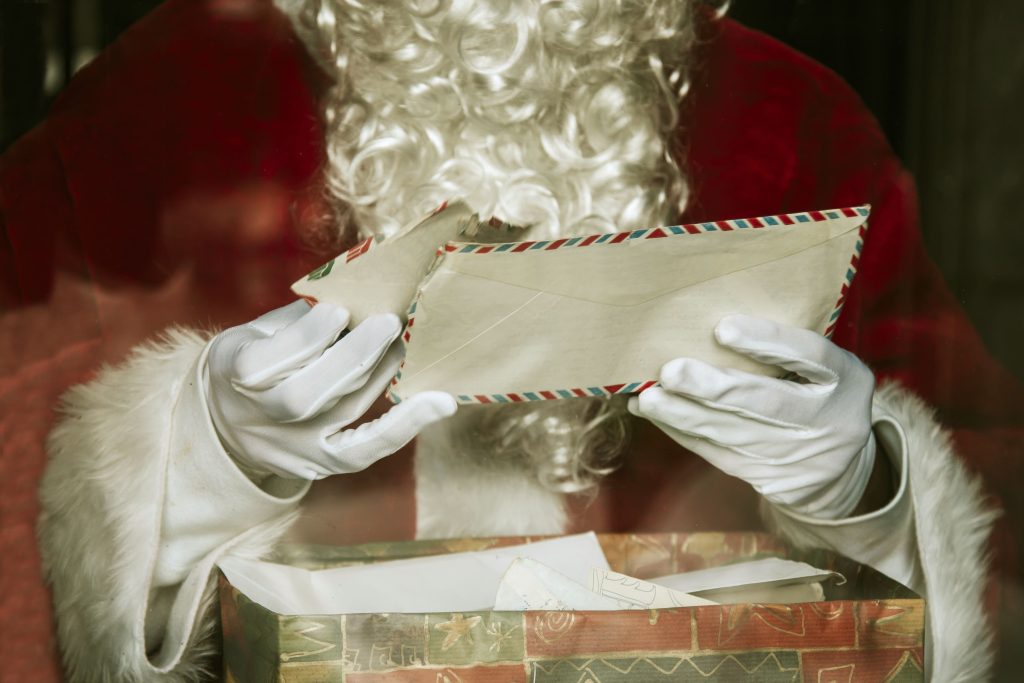






Santa Claus is not a literal person who flies around the world in one night. He is a Christmas character shaped by the real Saint Nicholas, centuries of storytelling, and family traditions of generosity and wonder.
That factual answer is simple. The parenting moment may not be. A child asking “Is Santa real?” might be curious, repeating something heard at school, testing whether you will answer honestly, or asking for permission to stop pretending. Before giving a long explanation, ask one gentle question: “What made you wonder?”
Key Takeaways
- Find out what prompted the question before choosing your answer.
- Give a direct factual answer when a child clearly requests one.
- Avoid turning belief into a test of goodness or Christmas spirit.
- Let the child’s reaction guide the length of the conversation.
- A new role can preserve the tradition without requiring continued belief.
First, Work Out What Your Child Is Asking
The same five words can carry several different questions.
| What may be happening | A helpful opening |
| Simple curiosity | “What do you think Santa might be?” |
| A classmate said Santa is not real | “How did that make you feel?” |
| The story no longer makes sense | “Which part are you trying to work out?” |
| The child wants a direct answer | “I will answer honestly. Santa is a tradition people create together.” |
| The child wants reassurance without a full reveal | “It sounds as if you still enjoy wondering. We do not have to solve every part tonight.” |
Do not use the opening question to dodge indefinitely. Its purpose is to understand the need behind the question. If your child repeats it plainly or says, “Tell me the truth,” answer plainly.
What Research Says About Learning the Truth About Santa
There is no universal age at which children stop believing. In a recent study of 48 children and 383 adults, the average age of disbelief was around eight, but individual experiences varied. Some participants reported sadness or disappointment, especially when adults had promoted the story strongly, although negative feelings were usually short-lived. The large majority of adults in the study still planned to include Santa in celebrations with their own children. You can read the 2024 study abstract on PubMed.
An earlier study found that children often reached the conclusion themselves and generally described their reactions more positively than their parents expected. That research also points away from one rigid “correct age” and toward watching the individual child. See the 1994 study abstract on children’s discovery of the Santa myth.
These studies do not supply a perfect script. They do support three practical conclusions:
- Development varies, so age alone should not decide the answer.
- Children can feel more than one emotion at once, including pride, sadness, relief, and amusement.
- A calm, honest conversation is more useful than defending every detail of the story.
Age Is a Clue, Not a Deadline
A preschool child, an eight-year-old, and an older sibling may use the same question for completely different reasons. Age can help you choose vocabulary, but it cannot tell you what the child already knows, heard, or wants from you.
Look for the form of the question instead:
- Playful speculation: “How can the sleigh carry everything?”
- Evidence testing: “Why did Santa use the same wrapping paper as us?”
- Social pressure: “Everyone at lunch said only babies believe.”
- A request for honesty: “Please do not ask what I think. Just tell me.”
- A request to keep playing: “Can we still leave cookies even if it is a story?”
The final two examples sound almost opposite, but both deserve respect. One child is asking for facts; the other is asking whether knowledge ends the ritual. You can answer yes to honesty and yes to continued celebration at the same time.
Four Scripts You Can Adapt
If Your Child Seems Curious but Not Ready for a Full Answer
“Santa is a story and tradition that families enjoy in different ways. What part are you wondering about?”
This leaves room for the child to tell you whether the question is playful or serious. If they move on, let them. If they press for facts, move to a direct answer.
If Your Child Asks for the Truth
“The flying Santa in the stories is not a literal person. Grown-ups help create the surprises. Santa was inspired partly by a real person called Saint Nicholas, and now he represents giving without needing credit.”
Pause there. A child may want the full history, or may simply need a hug and a few minutes.
If Another Child Told Them
“I am sorry you had to hear it in a way you did not choose. The story version of Santa is something families create together. You can ask me anything, and you are not in trouble for wondering.”
Avoid criticizing the other child or their family. Children live among classmates with different cultural, religious, and household traditions.
If They Already Know and Want a New Role
“You are old enough to help make part of Christmas for someone else. Would you like to choose one kind thing we can do secretly?”
Offer the role; do not impose it. A child who feels disappointed may need time before becoming a helper.
What Not to Say in the Moment
Some answers add pressure without resolving the question. Avoid:
- “If you do not believe, Santa will not come.” This ties gifts to a claim the child may already understand differently.
- “Only babies ask that.” Curiosity is not immaturity, and shame can close the conversation.
- “Of course he is real. Here is the proof.” Elaborate evidence can deepen the conflict when the child has requested a direct answer.
- “You must not tell anyone.” Ask for kindness around younger children, but do not make the child responsible for defending the story in every setting.
- “It was all a lie.” That phrase may match the child’s first feeling, but it erases the real giving, planning, and shared play that took place.
- “Now you are Santa.” A new role can be meaningful, but not if assigned before the child has processed the change.
A better sequence is: answer, pause, acknowledge, then ask what they would like to keep. You do not have to rescue the mood in one conversation.
The Real History Behind Santa
Saint Nicholas was a Christian bishop associated with Myra, in present-day Türkiye. The historical record is limited, and many familiar stories about his secret gifts were written down long after his lifetime. Still, the tradition of a generous Saint Nicholas became deeply rooted in Europe.
Dutch Sinterklaas traditions later influenced the name “Santa Claus” in America. An anonymous poem published in 1823, traditionally attributed to Clement Clarke Moore, added the miniature sleigh, eight named reindeer, and chimney entrance. Nineteenth-century artist Thomas Nast then helped establish Santa’s North Pole home, workshop, and visual identity. Later advertising, film, music, and family practice kept reshaping the character.
So there is a factual answer children can hold onto: Santa is not one real man doing all the work. Santa is a story with real historical roots, kept alive by real people who give. For the sourced timeline, see the history of Santa Claus.
How to Keep Christmas Special After the Reveal
Try separating the emotional parts of Christmas from the claim that Santa is literal.
- Keep the rituals your child still enjoys, such as baking, lights, stockings, or a special movie.
- Invite them to choose one act of anonymous generosity.
- Let them help with a younger sibling only if they want the responsibility.
- Make room for disappointment instead of immediately selling the “helper” role.
- Agree on how your family will discuss Santa around younger children and other families.
- Avoid saying that only children who believe receive gifts.
If your child wants to keep writing letters as imaginative play, that is also allowed. Older children often enjoy traditions while understanding how they work, just as families enjoy stories, theater, and surprise gifts without treating them as literal facts.
When Adults in the Family Disagree
Parents, grandparents, and co-parents may not share the same Santa language. Settle the adult plan away from the child where possible. Agree on three points: what factual answer you will give when asked directly, which rituals may continue, and what younger siblings or cousins should be allowed to discover in their own households.
If another caregiver already gave a different answer, do not turn the child into a referee. You can say:
“People in our family have described Santa differently. I will tell you what I understand and answer your questions honestly.”
For separated households, avoid promises about what “Santa” will deliver in the other home. Each adult can explain their own traditions and coordinate practical details without asking the child to maintain two incompatible stories.
The First Day After the Conversation
The conversation does not need an immediate ceremonial ending. Let ordinary Christmas life continue, and check in later with one open question: “How are you feeling about what we talked about?”
If the child is sad, name the loss without arguing it away. If they are relieved or amused, follow that response instead of insisting the moment must be emotional. If they have more questions, answer them in small pieces. The goal is not to produce one approved reaction; it is to show that questions remain safe after the answer changes.
A Note From a Company That Sells Santa Letters
Santa’s Magical Kingdom sells personalized Santa letters, so we have a commercial interest in the tradition. A letter can add warmth and specificity when a family has already chosen to celebrate Santa. It should not be used as evidence to defeat a child’s direct question or pressure them back into belief.
If you continue the tradition this year, keep the message kind and avoid using Santa to threaten, monitor, or shame. A letter that notices effort, generosity, or a meaningful event is more constructive than one that claims a child has been watched. You can use our Santa letter writing guide without purchasing anything.
Frequently Asked Questions
Is Santa real?
The flying, gift-delivering Santa of modern stories is not a literal person. The character has real historical roots and continues through real family and community traditions.
Was Saint Nicholas a real person?
Saint Nicholas is generally understood to have been a bishop associated with Myra. The surviving evidence is limited, and many famous stories about him are later traditions rather than documented contemporary events.
At what age do children stop believing in Santa?
There is no single age. Research finds an average around eight in one recent sample, with meaningful variation before and after that point.
Should I tell my child the truth if they ask directly?
If a child clearly asks for a factual answer, honesty is the safest basis for trust. Keep the first answer short, then let their questions determine how much more to explain.
Will the truth ruin Christmas?
It may bring temporary disappointment, but Christmas contains many traditions that do not depend on literal belief. Preserve the parts your child values and invite, rather than require, a new role.
What if my child feels betrayed?
Listen before defending your choice. You can say that you intended the tradition as shared play and surprise, acknowledge the child’s feelings, and answer future questions directly.
What if my child still wants to believe?
You do not need to force a reveal from one tentative question. Ask what they are wondering, avoid making new elaborate claims, and be prepared to answer clearly if they request the truth.
What should I say if a classmate told my child?
Focus first on your child’s reaction rather than who was right or wrong. Explain that families handle Santa differently and invite any question without criticizing another household.
How do I keep an older child from telling a younger sibling?
Have a private conversation and explain that every family should choose its own timing. Ask for discretion, but do not make the older child responsible for maintaining complicated evidence or lies.
Should I make my older child a Santa helper?
Offer it as a choice, not compensation they must accept. Some children enjoy creating a surprise for someone else; others need time before taking part.
Can we still write to Santa after my child knows?
Yes, if everyone treats it as storytelling, a keepsake, or a family ritual. A child can understand the tradition and still enjoy writing, receiving, or helping create a letter.
Can a personalized letter prove that Santa is real?
No. It can enrich imaginative play for a family that wants it, but it should not be presented as proof when a child is asking for an honest answer.
Let the Conversation Set the Pace
You do not need a courtroom argument or a perfect speech. Ask what prompted the question, answer the question actually being asked, and leave room for whatever your child feels next.
If your family chooses to continue Santa as imaginative play, you can write the message yourself or review the current personalized letter options. The letter should support a family decision already made, not replace the honest conversation.