



Most personalized holiday gift guides are built for adult recipients: engraved jewelry, custom photo books, monogrammed home goods. If you’re shopping for a child or grandchild instead, most of those categories don’t really apply, and the gifts that actually work for kids look different from what works for a spouse or a coworker.
Why Personalization Works Differently for Kids
An adult recognizes a personalized gift as a sign of thoughtfulness: someone chose this specific item for me, out of all the options available. A child experiences personalization more directly, especially when it involves a figure like Santa. A letter that gets their name, age, and a real detail from their year right doesn’t just feel thoughtful to a child. It feels like proof that Santa was actually paying attention, which is a different, and often stronger, reaction than an adult has to a monogrammed mug.
This distinction matters when you’re deciding what to actually buy. A photo mug personalized with a child’s face is a nice object. A letter personalized with a child’s specific accomplishment is closer to an experience, one that gets read, reread, and sometimes shown off to a sibling or grandparent, rather than just displayed.
Personalized Gift Categories That Work Well for Kids
Photo-based keepsakes like ornaments or small photo books work for kids too, though the emotional weight tends to land more with the parents keeping them than with the child receiving them. A five-year-old rarely lingers over a photo book the way a grandparent does.
Custom apparel or accessories, a name embroidered on a stocking, for instance, are a nice touch, but they tend to function more as decor than as a gift moment a child actively experiences on Christmas morning. Nobody unwraps a stocking and gasps.
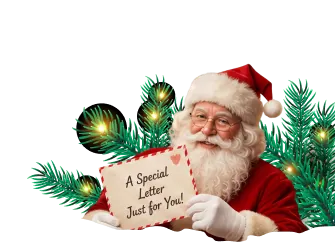
A personalized letter from Santa stands apart from both categories because it’s built around narrative, not just a printed name. It mentions specific achievements, wish list items, and family details, which gives a child something to actually read and react to, rather than something to simply look at or wear. That reaction, a kid rereading a letter twice in one sitting, is the thing most gift categories built around printed names or monograms don’t produce.
Grandparents and Extended Family
If you’re a grandparent, aunt, or uncle unsure what a grandchild, niece, or nephew would actually want, a personalized letter or Nice List certificate sidesteps the usual guessing game entirely. You’re not trying to predict which toy is trending this year, which is genuinely hard to do from a distance, especially if you don’t see the child often. You’re giving something that only requires knowing the child’s name, age, and one or two real details, which most extended family members already have without needing to ask around.
This is worth pointing out directly, since it’s a common source of holiday stress for grandparents specifically. Shopping for a grandchild you see a few times a year, without knowing exactly what’s currently popular among their friend group, often ends in either an overly generic gift or an awkward gift card. A personalized letter or certificate avoids both problems, since it doesn’t depend on knowing current trends at all, just a handful of true details about the child that a phone call to their parent can usually supply in a few minutes.
Building a Full Personalized Set
For families who want to go further than a single letter, pairing it with a Nice List certificate or a short note from Mrs. Claus creates a small, cohesive keepsake set rather than one standalone item. This works particularly well as a gift from a grandparent who wants to send something meaningful without shipping a large box, since the whole set is flat, lightweight, and easy to mail.
What Makes a Personalized Gift Actually Get Remembered
Not every personalized item earns a place in a memory box years later. The ones that do tend to share a few things in common: they reference something specific and true, rather than a name alone, they arrive with some kind of presentation, an envelope, a seal, a small ceremony around opening it, and they get read or used rather than just displayed on a shelf. A name engraved on an object is personalization in the loosest sense. A letter that gets something specific and true right about a child’s year is personalization that actually does something.
A Reasonable Budget Approach
Personalized gifts for kids don’t need to be the most expensive item on anyone’s list to have an outsized impact. A letter or certificate typically costs less than a mid-range toy or a piece of custom jewelry aimed at an adult recipient, which makes it a practical add-on for grandparents or extended family working within a fixed gift budget across several grandchildren or nieces and nephews.
When a Generic Personalized Gift Still Makes Sense
None of this is an argument against monogrammed mugs or custom ornaments entirely. For a coworker’s kid, a distant cousin, or a classroom gift exchange, a simple name-personalized item is often the right scale of gift, low effort, reasonably priced, and appropriate for a relationship that doesn’t call for anything more involved. The distinction that matters is relationship closeness and how much you actually know about the child. The closer the relationship, a parent, grandparent, favorite aunt or uncle, the more a specific, narrative-driven gift like a letter or certificate outperforms a generic personalized object. For more distant relationships, simpler personalization is often the more appropriate choice anyway, since a deeply specific letter from someone the child barely knows can occasionally feel slightly odd rather than heartwarming.
Shopping for Several Kids at Once
Grandparents and aunts or uncles with multiple grandchildren or nieces and nephews sometimes worry that personalizing gifts for each child individually takes more time than buying the same toy for everyone. In practice, ordering individual personalized letters or certificates usually takes less time than researching separate age-appropriate toys for each child, since the process is largely the same regardless of how many children are on the list, just with different names and details plugged in for each one. This also sidesteps a common holiday problem: buying the same generic toy for five cousins, only to have two of them turn out to already own it or have no interest in it at all.
It also solves a fairness problem that comes up more than people expect. When five cousins all get an identical toy, the one who already owns it or doesn’t care for it ends up feeling slightly overlooked compared to the others, even though the gift itself was equally generous. When each child gets a letter or certificate built around their own specific year, there’s no version of that comparison to make, since no two letters are meant to be the same in the first place.
Frequently Asked Questions
What counts as a personalized holiday gift for a child?
An item built around a child’s real name, age, or a specific detail from their year, distinct from adult-focused personalization like engraved jewelry or photo books.
Why does personalization work differently for kids than adults?
An adult recognizes personalization as thoughtfulness. A child experiences it as proof someone was actually paying attention, which tends to produce a stronger reaction.
Who benefits most from personalized gifts over generic ones?
Grandparents, aunts, and uncles who don’t see a child often and want something meaningful without needing to track current toy trends.
What personalized gift categories work well for kids specifically?
A personalized letter from Santa, a Nice List certificate, or a short note from Mrs. Claus, since these focus on narrative rather than just a printed name.
How is a personalized letter different from a photo-based keepsake?
A photo gift personalizes an image and tends to matter more to the adults keeping it. A letter personalizes a narrative a child actually reads and reacts to.
What information does a grandparent need to order a personalized gift?
Just the child’s name, age, and one or two real details, which a quick call to the parent can usually supply in a few minutes.
Can I build a full personalized set instead of a single item?
Yes. Pairing a letter with a certificate or a note from Mrs. Claus creates a cohesive, flat, lightweight set that’s easy to mail to extended family.
What happens when a personalized gift lacks a specific detail?
It reads as personalization in name only, similar to an engraved object, rather than something the child recognizes as true and specific to them.
Is it a misconception that personalized gifts always need to be elaborate?
Yes. The gifts that get remembered longest usually reference one small, true detail, not an elaborate or expensive production.
When does a generic personalized item, like a monogrammed mug, still make sense?
For a coworker’s child, a distant cousin, or a classroom exchange, where the relationship doesn’t call for anything more specific or involved.
How do I personalize gifts fairly across several grandchildren at once?
Give each child their own specific, accurate details rather than the same item for everyone, since ordering individually usually takes no more time than separate toy shopping.
Do personalized gifts for kids need to be expensive to make an impact?
No. A letter or certificate typically costs less than many toys, and the impact comes from specificity rather than price.
Can I order more than one personalized item as a set?
Bundling options can vary by product, so check current listings or ask at checkout whether ordering a letter, certificate, and postcard together is available.
Is a personalized letter appropriate as a gift from a grandparent rather than a parent?
Yes. Many families set these up specifically as a gift from grandparents, aunts, or uncles, since ordering only requires basic details about the child.
What personalized gift works best for a grandchild I don’t see often?
A personalized letter from Santa, since it only requires their name, age, and a couple of real details rather than knowing current interests closely.
Give a Gift That Reads Like It Knows Them
A personalized letter from Santa, for the child or grandchild on your list this year, tends to stand out precisely because it doesn’t look like everything else under the tree.