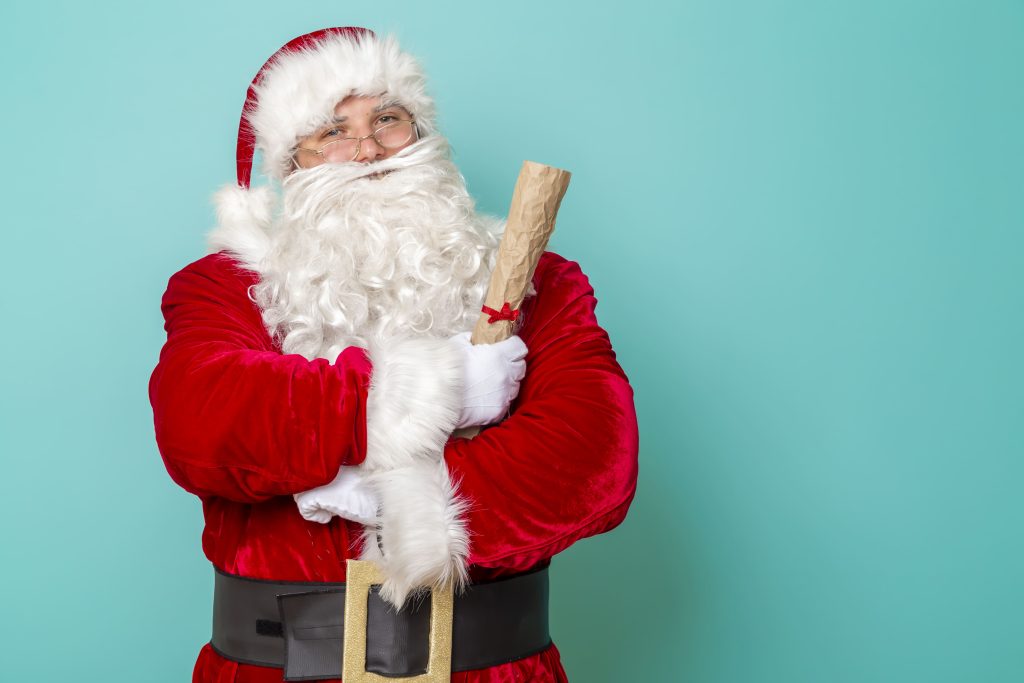






Have you ever sat by the fireplace on a cold December night and wondered if kids on the other side of the planet are doing the exact same thing? It’s a pretty cool thought. We all know the classic image of the guy in the red suit—the one we talk about when we visit Santa’s Magical Kingdom—but the truth is, Santa Claus Around the World is a lot more diverse than you might expect. Depending on where you live, “Santa” might be a tall, skinny bishop, a group of mischievous mountain trolls, or even a kind-hearted witch flying on a broomstick.
The holidays are this massive, beautiful patchwork of stories and traditions. It’s not just about the presents under the tree; it’s about how different cultures have taken the idea of a “gift-bringer” and made it their own. So, grab a mug of cocoa (or a cold drink if you’re reading this from the Southern Hemisphere!) and let’s take a trip to see how people celebrate the legend of Santa Claus Around the World.
Exploring the Traditions of Santa Claus Around the World
If we’re going to talk about global traditions, we have to start in Europe. This is really where the “root” of the legend lives. But even within Europe, the variations are wild.
The Netherlands: Sinterklaas and Amerigo
In the Netherlands, they don’t wait until December 25th for the big guy. Their version, Sinterklaas, arrives in mid-November on a steamboat from Spain. Yeah, you read that right—Spain! He’s much more formal than our North Pole Santa. He wears a tall red mitre (a bishop’s hat) and carries a long, gold staff. Instead of a sleigh pulled by reindeer, he rides a white horse named Amerigo over the rooftops.
The main celebration is on December 5th, called Pakjesavond. Kids leave their shoes by the fireplace filled with hay and carrots for the horse, hoping Sinterklaas will replace them with chocolate letters or spiced cookies called pepernoten. If you’re looking for general info on how different cultures handle the “naughty or nice” list, the Dutch tradition used to be a bit more intense, but nowadays it’s all about the treats and family fun.
Iceland: The 13 Yule Lads
If you think managing one Santa is hard, try thirteen! In Iceland, they have the Jólasveinar, or Yule Lads. These guys are the sons of a mountain-dwelling troll named Grýla. For the thirteen nights leading up to Christmas, one “lad” visits children each night.
They aren’t exactly “jolly” in the traditional sense. Each one has a specific personality and a bit of a mischievous streak. One is “Spoon Licker,” another is “Door Slammer,” and there’s even one called “Skyr Gobbler” who steals your yogurt. Kids leave a shoe in the window, and if they’ve been good, they get a small gift. If not? They get a potato. According to the Official Iceland Travel Guide, these characters have evolved from scary folklore into more friendly holiday figures over time.
Italy: La Befana
Now, this is one of my favorites because it’s so differant from the rest. In Italy, the “Santa” figure isn’t a man at all—it’s an old woman named La Befana. She doesn’t visit on Christmas Eve, though. She arrives on the night of January 5th, which is the Eve of the Epiphany.
Legend says the Three Wise Men stopped at her house to ask for directions to find the baby Jesus. They invited her to come along, but she said she was too busy with her housework. Later, she regretted it and went out to find them, bringing a bag of sweets. She never found them, so now she flies around on her broomstick, leaving candy for good children and coal (usually black rock candy) for the naughty ones. It’s a beautiful tradition that shows how Santa Claus Around the World can take on many faces.
Germany and Austria: The Christkind and the Scary Guy
In many parts of Germany, Switzerland, and Austria, the gift-bringer isn’t an old man but the Christkind (Christ Child). Depicted as a golden-haired, angelic figure with wings, the Christkind represents the spirit of Christmas.
But wait, there’s a darker side too. While the Christkind brings the gifts, there’s often a companion lurking nearby to handle the “naughty” kids. You might have heard of Krampus. He’s a half-goat, half-demon creature with horns and a long tongue. While we focus on the “jolly” side when we explore the kingdom of holiday lights, Central European kids have to be on their best behavior to avoid a visit from Krampus! If you want to see the UNESCO listing for winter festivals, you’ll see just how deep these mountain traditions go.
Santa in the Southern Hemisphere
We usually associate Santa with snow, heavy coats, and hot chocolate. But what happens when Christmas falls in the middle of a scorching summer?
Australia: Surfing Santa
In Australia, the idea of a guy in a heavy velvet suit doesn’t make much sense when it’s 100 degrees outside. While they still have the traditional imagery, it’s very common to see “Surfing Santa.” Instead of reindeer, some legends say his sleigh is pulled by “Six White Boomers” (large male kangaroos).
Families often spend Christmas Day at the beach or having a “barbie” (barbecue) in the backyard. It’s a laid-back, sun-soaked version of the holiday that feels totally unique. If you were to write letters to Santa from the Outback, you might ask for a new surfboard or some cricket gear instead of a winter coat!
Brazil: Papai Noel
In Brazil, Santa is known as Papai Noel. Since it’s summertime there, he usually wears silk or thin cotton versions of his red suit to keep from melting. One of the coolest traditions in Brazil is the “Amigo Secreto” (Secret Friend), which is a bit like a Secret Santa exchange that lasts all month. On Christmas Eve, families have a huge feast that usually doesn’t even start until 10:00 PM!
Why the Global Variation Matters
It’s easy to think that the world is becoming one big monoculture, but Santa Claus Around the World proves that we still hold onto our local roots. These stories aren’t just for kids; they are a way for cultures to pass down their values—like generosity, humor, and even a little bit of healthy fear for the “naughty” kids.
Whether it’s a “Father Christmas” in the UK who wears a long green robe or the “Hoteiosho” in Japan (a Buddhist god who acts similarly to Santa), the underlying theme is the same: the magic of giving. I definately think that understanding these differences makes our own celebrations feel richer. It reminds us that we’re part of a global family.
If you want to experience a place that brings all that magic together, you should really check out the train and wagon rides offered at various holiday parks. There’s something about moving through the lights that makes you feel connected to all these stories. And if you’re looking to add a bit of global flair to your own home, Kringle’s Store often has unique items that celebrate the many faces of the holiday.
Creating Your Own “Global” Traditions
You don’t have to live in Italy to celebrate La Befana, and you don’t have to be Dutch to enjoy some chocolate letters. Many families are starting to incorporate Santa Claus Around the World into their own homes. Maybe you leave a shoe out on December 5th, or you tell the story of the Yule Lads while you decorate the tree.
It’s a great way to teach kids (and ourselves!) about the world. Plus, it extends the holiday season! Why celebrate for just one day when you can have festivities that last from mid-November until early January?
So, next time you see a picture of Santa, remember that he’s got a lot of “cousins” out there. He might be riding a horse, flying a broom, or surfing a wave, but he’s always there to remind us that the world is a pretty magical place.
Frequently Asked Questions (FAQ)
- Who is Santa’s counterpart in France? In France, he is called Père Noël (Father Christmas). He travels with a character named Père Fouettard, who tells him how children have behaved throughout the year.
- Does every country have a Santa Claus? Most cultures have some form of a “gift-bringer,” though they aren’t always based on Saint Nicholas. Some are religious figures, while others are based on local folklore or pagan spirits.
- What is the “Christmas Log” in Spain? In Catalonia, they have “Tió de Nadal,” a hollow log with a smiley face and a blanket. Children “feed” it and hit it with sticks so that it “poops” out presents on Christmas Day.
- Why does Santa look the same in most advertisements? Global branding and media (like Coca-Cola and Hollywood) have popularized the American version of Santa, but local traditions still thrive alongside the “Global Santa.”
- Who brings gifts in Russia? In Russia, gifts are brought by Ded Moroz (Grandfather Frost) and his granddaughter, Snegurochka (The Snow Maiden), usually on New Year’s Eve.
- Do children in Japan celebrate Santa? Yes! While not a traditional holiday, Christmas is very popular in Japan. It’s often celebrated with fried chicken and “Hoteiosho,” a god of good fortune who is often compared to Santa.
- Is there a “Santa” in China? In China, he is known as “Sheng dan lao ren” (Old Christmas Man). While Christmas isn’t a public holiday there, it’s widely celebrated in major cities with decorations and gift exchanges.
- What is the most unique “Santa” transport? While reindeer are the most famous, we’ve seen everything from Sinterklaas’s horse in the Netherlands to a donkey in Switzerland and even a sleigh pulled by kangaroos in Australia!
- When is the “main” day for Santa gifts globally? It varies! In some places, it’s December 5th or 6th, in others, it’s Christmas Eve or Day, and in some cultures, it’s New Year’s Eve or January 6th.
- How can I learn more about these traditions? A great way to start is by visiting local holiday festivals or browsing through Santa’s Magical Kingdom to see how different legends are brought to life through lights and storytelling.